
Decoding the Medical Complexities of an Autistic Son
Marina Sarris
Date Revised: May 21, 2026
Denise Lombardi grew up among family members with disabilities, and she watched her son RJ closely for signs since he was a baby.
She noticed when he didn’t look at her eyes or babble like other infants. She took him to doctors, who diagnosed him with autism in 2005, when he was only 19 months old, she says.
“One of the reasons why he was diagnosed so young was because I was paying very close attention to his development. I didn’t know about autism at the time, but I was looking for general signals,” she recalls. She knew that having a child with a disability was possible. Her sibling and some of her relatives had disabilities or developmental challenges.
About a year later, RJ was diagnosed with a type of seizure. Seizure disorders are more common in autistic people.
Ever watchful, Denise checked on RJ when he slept. She noticed his breathing was irregular. He underwent a sleep study that found he has sleep apnea.
Looking to Do More for Their Autistic Son and Others Like Him
Denise and her husband, Rob, wanted to do more for their son and others who, like him, have profound autism. People with profound autism need 24-hour care throughout their lives, have little or no speech, and have intellectual disability, according to researchers.1, 2
The Lombardis were among the first families to join the SPARK autism study when it launched in 2016.
RJ’s parents hoped that autism research would lead to better treatments, particularly for people with complex medical needs.
RJ had experienced complex partial seizures and frightening fainting episodes that worried his parents. In March 2017, for instance, he collapsed one night after getting out of bed to use the bathroom. That episode, among others, contributed to his parents’ decision to enroll him in a residential special education school when he was 13. There, he received medical care and around-the-clock monitoring.
Searching for a Genetic Answer to Autism
Denise wondered if the answers to RJ’s health conditions could be found in his genes.
The Lombardis contributed saliva samples to SPARK to help its researchers find more genes linked to autism.
The SPARK study analyzes participants’ DNA and will inform them – if they want to know – if scientists find a variation to a gene that causes autism. SPARK discovers these variants in 8 to 10 percent of its autistic participants. But RJ was not among them. SPARK told the Lombardis that it has not found any autism variants in his DNA so far, Denise says.
Denise wanted to know more about her son’s genes than a research study could provide. “We have extraordinary gratitude for the SPARK study. But if you need information today about something that you think might be going on biologically, then that’s not the tool to rely on,” says Denise, a consultant who also serves on the SPARK Community Advisory Council.
SPARK agrees. Its website says, “For a full picture of your and your family’s genetics, we recommend pursuing clinical genetic testing.”
The Difference Between Research and Clinical Genetic Testing
In 2019, the Lombardis took RJ to a doctor who specializes in genetics. Doctors can order clinical genetic tests that may provide more information, more quickly, than a research study can.
Clinical tests showed that RJ has a variant in his SCN5A gene, Denise says. His variant is of unknown significance, which means that doctors do not know yet if the variant affects the way the gene works. Some genetic variants in SCN5A can contribute to heart problems, but the gene is not believed to be related to autism.
RJ sometimes collapsed and became unconscious at night, soon after getting out of bed. RJ, who is now 6 feet 6 inches tall, has been injured when falling to the ground during such episodes. Were these seizures, or something else?
Denise recorded the dates, times, and circumstances of these episodes. This was important because autism limits RJ’s ability to communicate. “He can’t tell us something hurts or something’s wrong,” she says.
A doctor implanted a heart monitor under RJ’s skin to record his heart activity around the clock. At first, one recording was interpreted as a dangerous abnormal rhythm called Torsades de Pointes.
A specialist later reviewed the data and found that RJ did not have Torsades.
Medicine that he was taking may have contributed to episodes when his heart rhythm changed, Denise explains. Doctors in different specialties are now focusing on episodes when his heart rhythm slows and pauses, among other things.
The Transition to Adulthood
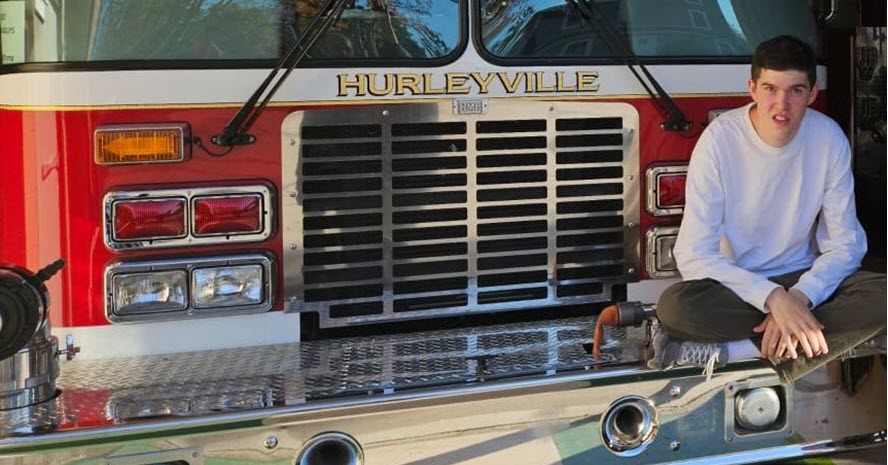
During his medical journey, RJ thrived on the structure and routine at his school. He has a keen sense of direction and a sly sense of humor, his mother says. In his free time, he enjoys visiting a local fire station, where his mother is a volunteer firefighter.
RJ finished school in 2025 when he turned 22. He has been receiving transitional services to help with job skills. Like thousands of new graduates with disabilities, he is waiting for adult disability services to begin. Services for autistic adults are often much harder to obtain than those for children and youth, who are guaranteed necessary special education services through age 21.
Denise has become an advocate for people with profound autism and other disabilities. “We are grateful to the scientists and researchers working to better understand people with complex needs across the lifespan and to help close the gaps that families like ours experience every day,” she says. “We are especially thankful for efforts like the SPARK autism study, which brings families and research together.”
“My hope is simple, that RJ and others like him are supported, understood, and able to live full lives with the care and dignity they deserve.”
Interested in joining SPARK? Here’s what you should know.
Photo provided by Denise Lombardi.