
SPARK Research Match Report: Flexibility and Emotion Management Skills Are Linked to Anxiety and Depression in Autistic Adults with Higher Support Needs
Date Published: October 20, 2026
This is a SPARK Research Match Summary Report. It describes results from newly published research using data from SPARK participants.
Study title
Executive Functioning Is Linked to Internalizing Symptoms in Autistic Adults With Higher Support Needs
What was the study about?
This study looked at the relationship between three executive functioning skills and the mental health of autistic adults who need higher levels of support. Executive functioning describes thinking skills that help people to focus, remember, plan, and accomplish tasks.
How was the research done?
Caregivers and guardians filled out surveys about 486 autistic adults in SPARK who have higher support needs. The surveys measured anxiety, depression, and three executive functioning skills—flexibility (adapting to change), managing emotions, and self-control. Researchers compared the levels of the adults’ executive functioning skills with their levels of anxiety and depression symptoms. The adults had legal guardians and were ages 18 to 68. Most also had intellectual disability.
What did the researchers learn?
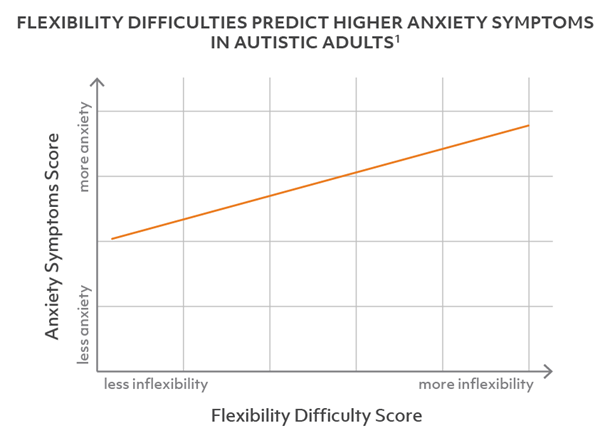
- Autistic adults who had more problems being flexible and managing their emotions also had higher levels of anxiety and depression symptoms.1
- Having difficulty with self-control was not directly related to symptoms of anxiety or depression. Other research has linked self-control problems to impulsive or aggressive behaviors.
What was new and innovative about the study?
This study is among the first to focus on the link between types of executive functioning skills and mental health in autistic adults with high support needs. Adults with intellectual disability and high support needs have often been overlooked in research. Many autism studies focus on adults who do not have intellectual disability or on children.
What do the findings mean?
Mental health programs for autistic adults with high support needs could focus on teaching skills for adapting to change and for managing emotions. This could help to improve symptoms of anxiety and depression, the researchers say.
What are people saying?
Study participants:
- “Happy to see some research for adults with autism.”
- “This is a very important topic that needs more research to highlight the unmet daily needs of this vulnerable, underserved population.”
- “You touched on some very interesting points and gave me things to think about as I continue to find ways to help [my adult child]. Thank you!”
- “I love the work you guys are doing!”
Study researcher:
Gregory L. Wallace, Ph.D., professor, The George Washington University:
“Executive function skills, such as staying flexible when plans change, regulating emotions, and managing impulses, are tied to mental health among autistic people without intellectual disability across the lifespan. Helping autistic people strengthen these skills and manage environments that tax these skills not only improves mental well-being but also lifts quality of life for them and their families. However, nearly all research to date has focused on autistic people without intellectual disabilities. Our study focused on autistic adults with higher support needs, and we found that challenges with behavioral flexibility and emotional control are also closely linked to mental health challenges in this group. These findings provide a foundational first step toward building tailored support programs that strengthen executive skills and boost long-term well-being for autistic adults who need higher levels of support.”
What’s next?
The researchers recommend studying other executive functioning skills—such as remembering to do something and planning—and looking at other concerns for autistic adults with high support needs. Future studies should recruit a wider range of people and include input from autistic adults, the study says.
References
- Greenstein E. et al. Autism 30, 2334-2349 (2026) PubMed
Staff used an artificial intelligence tool, NotebookLM, to help summarize the research. Quotes came from participants and researchers. Staff and a researcher edited and reviewed the content.
About SPARK Research Match
This SPARK program matches participants with research studies that they may want to join. These studies have been evaluated for scientific merit and approved by a scientific committee at SPARK. The program is free to researchers and participants. SPARK does not endorse or conduct these studies. Participants choose if they want to take part in a particular study.