
Making the World a Kinder Place for Children With Severe Autism
Marina Sarris
Date Published: November 5, 2025
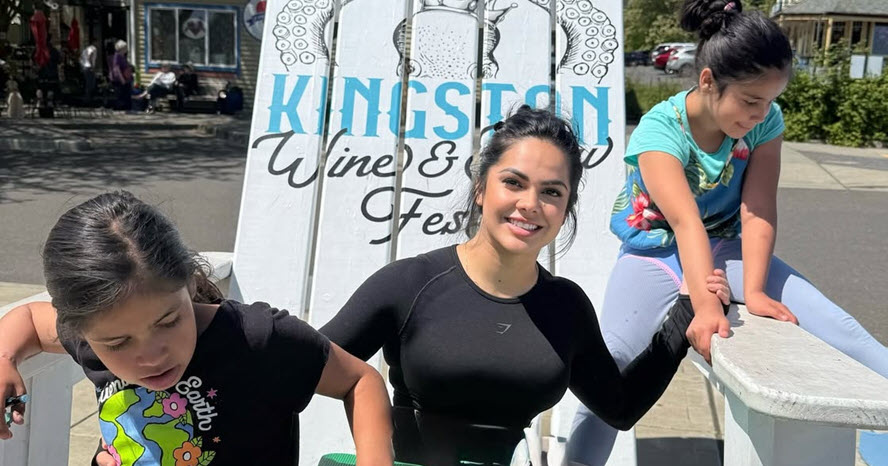
Twins Kira and Aliya share many things: a bright smile, a love of art, and a strong resemblance to each other. The 10-year-olds also share the same condition: severe autism.
Their needs are complex, explains their mother, Nataly Cuzcueta. They do not speak, have seizures, and struggle with self-injury, a serious behavior that can occur in autistic people. Since their diagnosis eight years ago, she has focused on helping them find the therapies, medical care, and services they need. “Our journey has been a tough one,” she says.
Despite those challenges, the girls share a particular strength: “They are really, really good at art,” Cuzcueta says.
That isn’t just the opinion of a proud parent. In fact, Kira won an art contest for her grade sponsored by her school district in Washington state. Her artwork is among 40 pieces, out of 1,100 submitted, that were chosen to represent students in preschool through grade 12 this school year.
Their mother delights in the joy they find when coloring and drawing. She says she hopes to make the world a more beautiful, and kinder, place for them and others with disabilities. “They just need love, kindness, and understanding,” she says.
Early Signs Launch a Quest for Answers
The family’s journey to autism diagnosis began early. As babies, Kira and Aliya could babble and say a couple of words. But shortly before their first birthday, they began to lose skills. They stopped trying to talk and make eye contact and began having meltdowns.
Their mother began researching the loss of developmental skills, called regression, online. She learned that autism may cause children to lose skills or stop gaining new ones.
Kira and Aliya were diagnosed with autism at age 2 at Seattle Children’s Hospital, a clinical partner of the SPARK autism study. That is where the family learned about SPARK, which they joined.
That began the family’s association with the hospital. The twins enrolled in the Early Intervention Program at Seattle Children’s Autism Center. Over the years, they also received health care at the hospital for various conditions, including self-injury.
People with self-injury may hit, scratch or bite themselves, or bang their heads. Self-injury is relatively common in autistic children, many of whom outgrow it. Those who don’t may suffer serious injuries, such as broken bones, bruises, and concussions, according to doctors.
Last year, Kira and Aliya spent months at Seattle Children’s and at a residential treatment center in Texas for help with self-injury. During these stays, they responded to structured and predictable schedules and supports, their mother says. “They were not in fight-or-flight mode all the time,” she says. That helped them learn some coping skills. Now they have fewer and less severe episodes of self-harm.
Differences Amid the Similarities
Kira and Aliya look so much alike that many people cannot tell them apart. But Cuzcueta says that doctors told her they are probably not identical twins.
Her daughters communicate by pointing at, or pulling someone to, what they want. They sometimes will use picture symbols or communication devices to make their needs known, although this method does not always work for them.
They both enjoy drawing, but they also have different interests. Kira loves the colors blue and purple and playing with dolls. Aliya prefers pink and holding her favorite stuffed doll, a character from a film.
Life is busy in their household. Cuzcueta is a single parent who works two jobs in the marketing field. Sometimes friends will come over to help so she can get some sleep. But most of the time, she says, “I’m a one-woman crew.” She was recently approved for in-home help and respite care through a state program.
Teaching Others About Severe Autism
Cuzcueta still makes time to raise awareness of the needs of children with developmental conditions. At Seattle Children’s, she serves on two family advisory boards along with the Family Advisor Program. She and other family advisors share their experiences and insights, partnering with the hospital to improve care.
Cuzcueta spoke with Emergency Department employees about her daughters’ experiences as patients. Staff may not always know in advance that a patient has nonspeaking autism, she explains. “Let’s say a nurse comes in and she says to the child, ‘Hello, what’s your pain like? I’m talking to you – hello!”
Cuzcueta would like hospitals to put a note or sticker on the exam door or in the patient’s chart about autism, like they do for allergies. That way, nurses and doctors can be prepared to use pictures to communicate and to spend more time with these patients, before they enter their room.
Hospital leaders appreciate Cuzcueta’s insights. “Voices like hers are invaluable to help us improve our care for all families and help to meet them where they are,” says Sabreen Akhter, D.O., the faculty liaison for the Emergency Department Family Advisory Board.
Cuzcueta has also volunteered at Seattle Children’s in other ways. She has raised money for toys and supplies for the Early Intervention Program and shared her family’s story at fundraising events that benefit the Autism Center and other hospital programs.
“Nataly never turns down an opportunity to share her story and advocate for children with autism and developmental disabilities,” says Mendy Minjarez, Ph.D., director of the Applied Behavior Analysis Early Intervention Program at the Seattle Children’s Autism Center.
A New Goal: Flexible Work Schedules for Parents
Cuzcueta has a new mission. She wants to raise awareness of the need for flexible work hours for parents of children with complex needs. One year, she says, she lost three jobs because of absences to care for her twins. Sometimes their school asked her to pick them up early due to a problem. She lost a job because she had to take time off to get her daughters from the treatment center in Texas.
Several SPARK parents said that they have faced similar problems on the job because they have had to leave work to manage a child’s behavior at school or day care.
“One of my next big missions is to figure out how to incentivize employers to have flexibility for parents that are in my situation, who have kids with special needs that are really unpredictable,” Cuzcueta says.
Looking to Autism Research for Answers
Several years ago, Cuzcueta learned the reason for the twins’ autism. They have a rare variation in their KMT2C gene, she says. Some people with this condition have speech delay, seizures, autism, or regression, according to Simons Searchlight, a companion program to SPARK.
Cuzcueta says that she hopes researchers will provide answers, not just about the causes of autism, but also about interventions that could improve her daughters’ lives.
“I want to know about therapy protocols and studies about different things that we can try to help them. I don’t know any autism parent who wouldn’t go the extra mile for their child,” she says.
“My priority is making sure they have a good quality of life every single day,” she says. “And I feel like I chase that every single day.”
Interested in joining SPARK? Here’s what you should know.
Photo provided by Nataly Cuzcueta.